New satellite for aurora research launched
It is an exciting time for everyone interested in space at the moment. On 19 May, the research satellite SMILE – Solar wind Magnetosphere Ionosphere Link Explorer – was launched from Kourou in French Guiana.
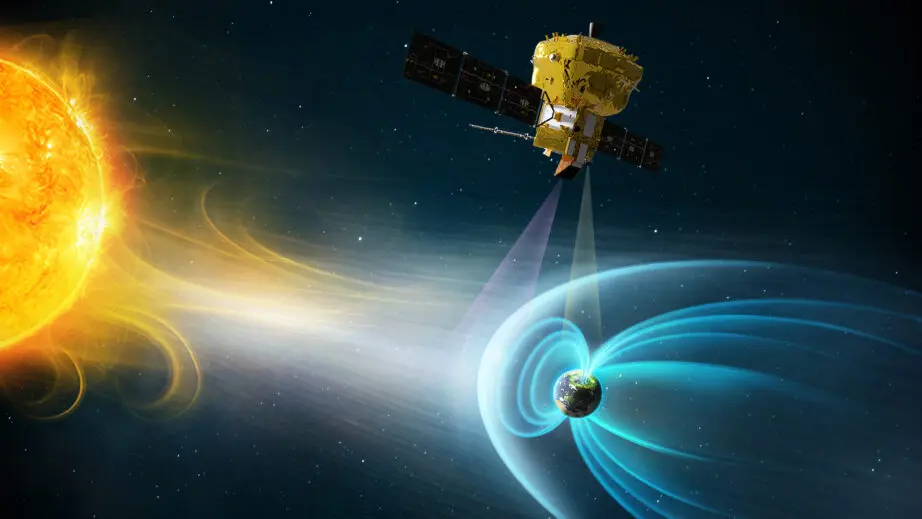
Artist's impression and not to scale image of the satellite SMILE (the Solar wind Magnetosphere Ionosphere Link Explorer). Photo: ESA
Written by: Stein Haaland (UNIS), Kjellmar Oksavik (UNIS and the University of Bergen), Pål Brekke (UNIS and the Norwegian Space Agency) and Fred Sigernes (UNIS)
The SMILE satellite is a collaboration between the European Space Agency (ESA) and the Chinese Academy of Sciences (CAS).
SMILE will investigate what happens when particles from the Sun strike the Earth’s magnetic field, and why we experience strong auroras. SMILE will also help us improve forecasting of solar storms. Such storms can create spectacular auroral displays in the night sky, but they can also damage satellites, disrupt navigation and radio communications, and in the worst cases knock out power supplies.
UNIS is part of the team
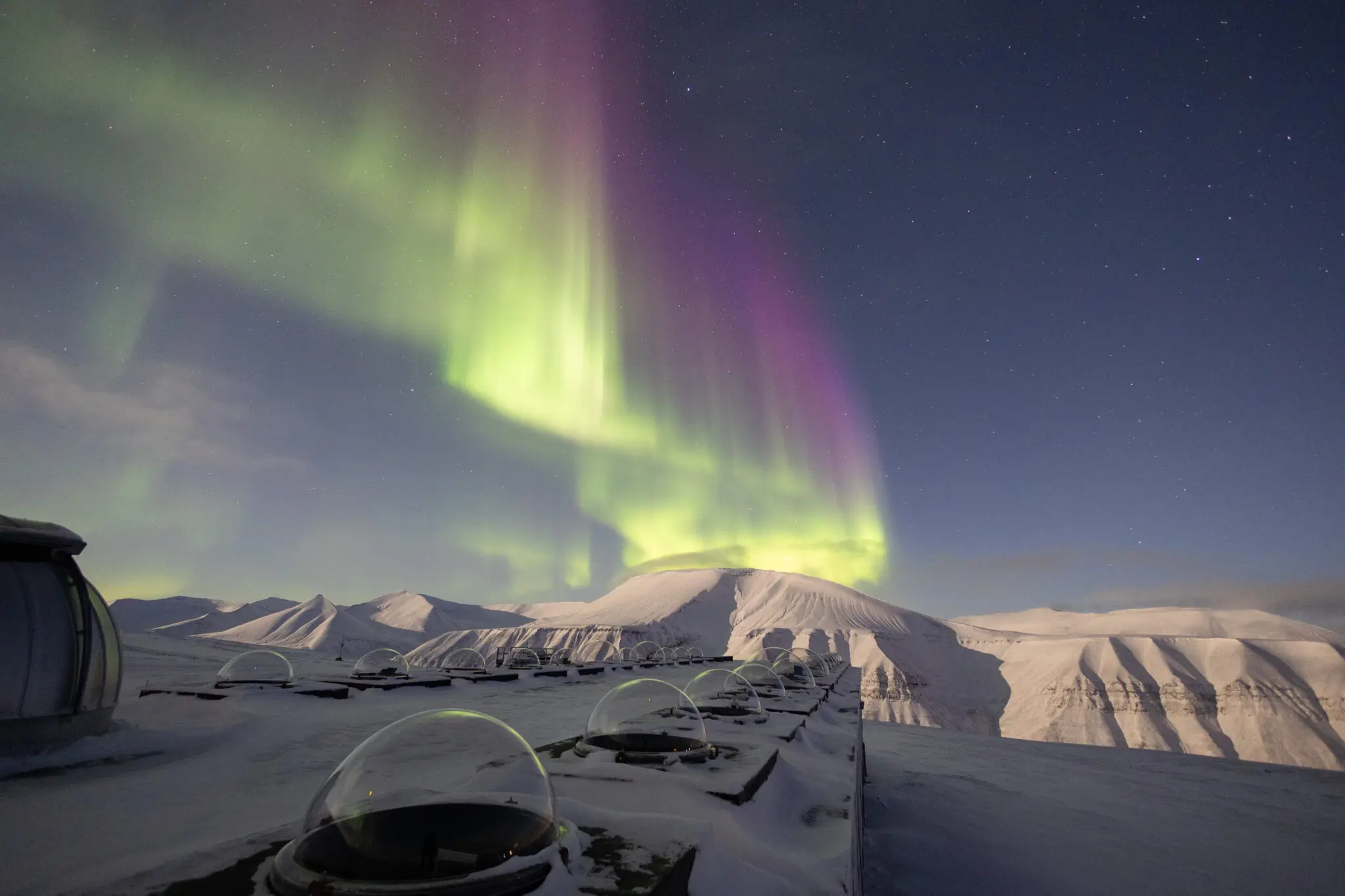
Auroras and the effects of space weather are also key research areas for UNIS, which operates, among other facilities, the SuperDARN radar and the Kjell Henriksen Observatory (KHO) at Breinosa. These UNIS installations will be useful for calibration – particularly for the auroral camera onboard SMILE. At Breinosa, the EISCAT antennas also make measurements of charged particles in the upper atmosphere.
SMILE will operate in a polar orbit at altitudes of up to 121,000 km. This allows the satellite to observe the aurora continuously for up to 45 hours during each orbit.
SMILE carries two important cameras. One will take ultraviolet images of the polar regions, enabling the study of auroras even in daylight. Auroras actually occur continuously, but we cannot see them with the naked eye or with optical instruments at the Kjell Henriksen Observatory when it is light outside.
UNIS adjunct professor, Kjellmar Oksavik, leads the Norwegian contribution to the second key camera aboard SMILE. His research group at the University of Bergen has supplied the shutter mechanism for a camera that will capture X-ray images of the Earth’s magnetosphere.
Will go through thorough testing
X-ray imaging is something most of us associate with dentists or hospitals. However, when charged particles from the Sun strike the outer edge of the Earth’s magnetic field, weak X-ray radiation can be produced. The SMILE satellite will attempt to detect this radiation to create images of the magnetosphere’s outer boundary. If successful, we will be able to observe how the Earth’s magnetic field changes when solar storms reach our planet. This will give us a better understanding of how such storms affect us.
Before the SMILE satellite can deliver its first results and images, several months of thorough testing and commissioning will be required. The satellite must first be placed into the correct orbit and stabilised. Then the solar panels are deployed, the instrument platforms activated, and other essential systems brought into operation. Finally, each instrument is switched on and undergoes extensive testing to ensure that everything functions as expected.
Space research and space-related activities, with UNIS, EISCAT and KSAT as leading actors, are important for the development of society in Longyearbyen. At UNIS, we are proud to play a role in shaping this development. We look forward to sharing more exciting updates, both about the SMILE satellite and other research in the time ahead.
A Norwegian version of this text is published in Svalbardposten: Ny satellitt for nordlysforskning skutt opp