
Master’s student publishes in renowned journal: Polar night under pressure
Former UNIS master’s student Jildou Dijkstra has had her master’s thesis published in the internationally recognised journal Global Change Biology Communications.
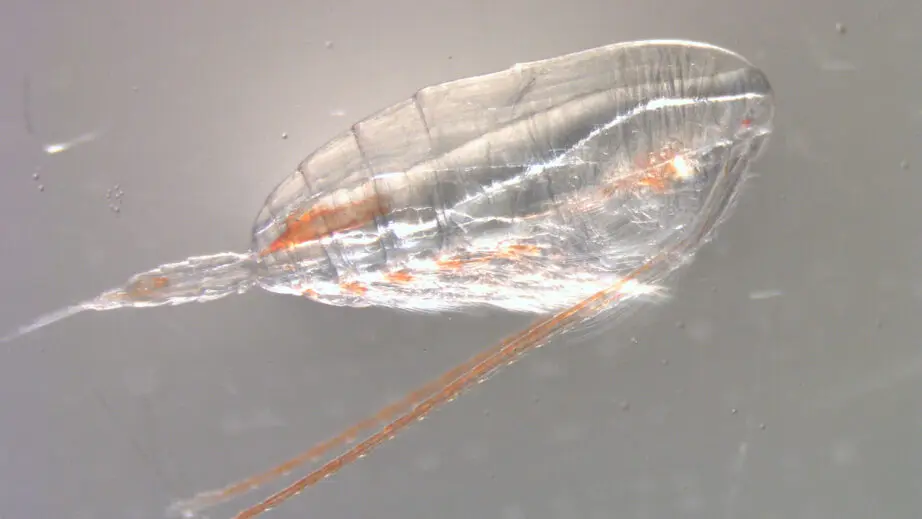
The lipid-rich copepod Calanus glacialis is a key biomass species in Arctic marine ecosystems. Photo: Private.
By Ingrid Ballari Nilssen
– It’s a big achievement, says supervisor and professor Janne E. Søreide.
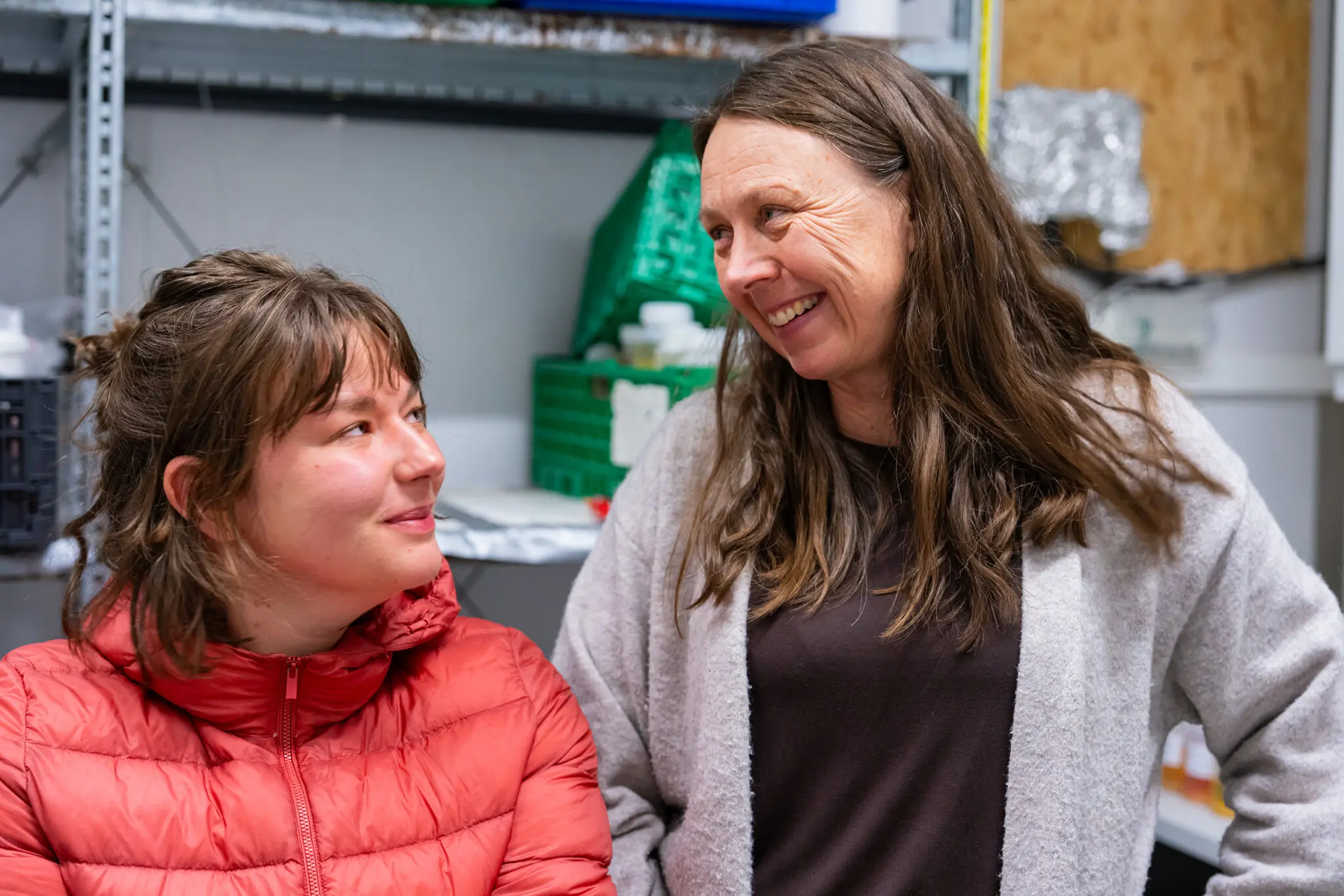
Shortly before Dijkstra left for her new PhD position at the Alfred Wegener Institute in Germany, we had the opportunity to speak with both her and Søreide about the project.
The study grew out of an idea developed by Janne E. Søreide at UNIS and researcher Khuong Van Dinh at the University of Oslo during the major Norwegian research project The Nansen Legacy. This collaboration later led to a prestigious Young Researcher Project for Dinh (Overwintering), funded by the Research Council of Norway, with additional funding to Søreide through the CLEAN project at the Fram Centre in Tromsø.
Dinh initially wanted to focus on the productive summer season, but Søreide encouraged him to turn his attention toward the polar night.
– That is what makes the polar regions unique. Many climate drivers may change, but the absence of light during winter will always remain constant, she says.
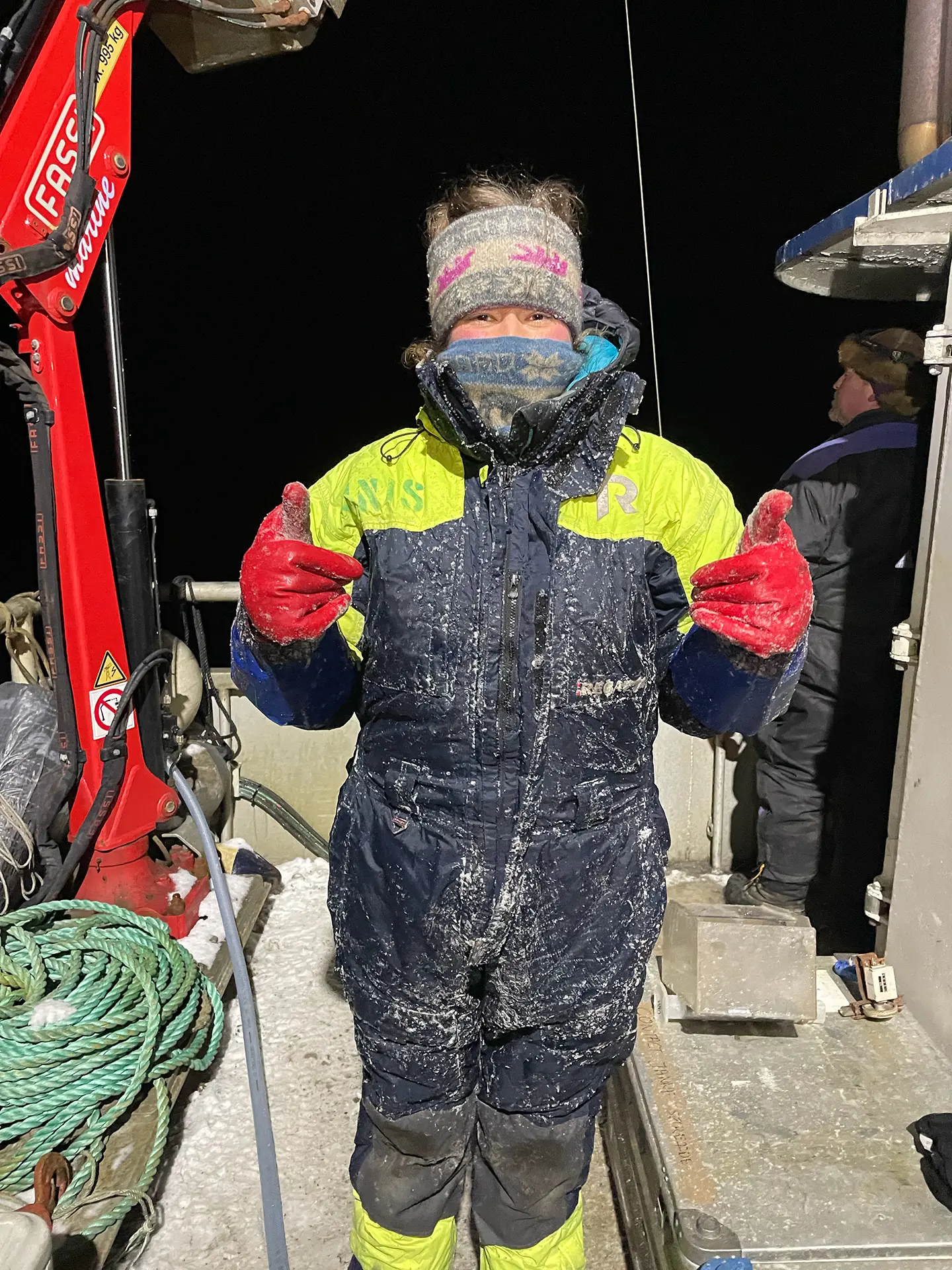
The long, dark winter is demanding for all Arctic animals, and many species enter dormancy to survive. At the same time, the researchers wanted to investigate multiple stressors simultaneously, since this is how nature actually works.
– In nature, there is never just one stressor. There are always multiple factors acting together, Søreide explains.
Søreide and Dinh wanted to investigate how warmer seawater temperatures combined with ocean acidification affect copepods, small crustaceans that play a key role in the Arctic food web. The study focused on the copepod Calanus glacialis, commonly known in Norwegian as ishavsåte. This species consists of up to 70% fat and is an essential prey item for polar cod, little auks, and baleen whales in the Arctic.
A vulnerable phase during the polar night
Arctic copepods have much longer life cycles than their Atlantic relatives, often up to twice as long or more. One of the most important phases in their life cycle is metamorphosis, or molting, when they develop into adults. Previous seasonal studies showed that this transition often takes place around Christmas, right in the middle of the darkest period in Svalbard.
– This is a vulnerable period, says Søreide.
Jildou Dijkstra joined the project after reaching out to several institutions, including UNIS. At her home university in Amsterdam, opportunities to study polar biology were limited.
– The closest I had come was a theoretical study of ice-covered freshwater systems, Dijkstra says.
Tracking stress all the way down to the cellular level
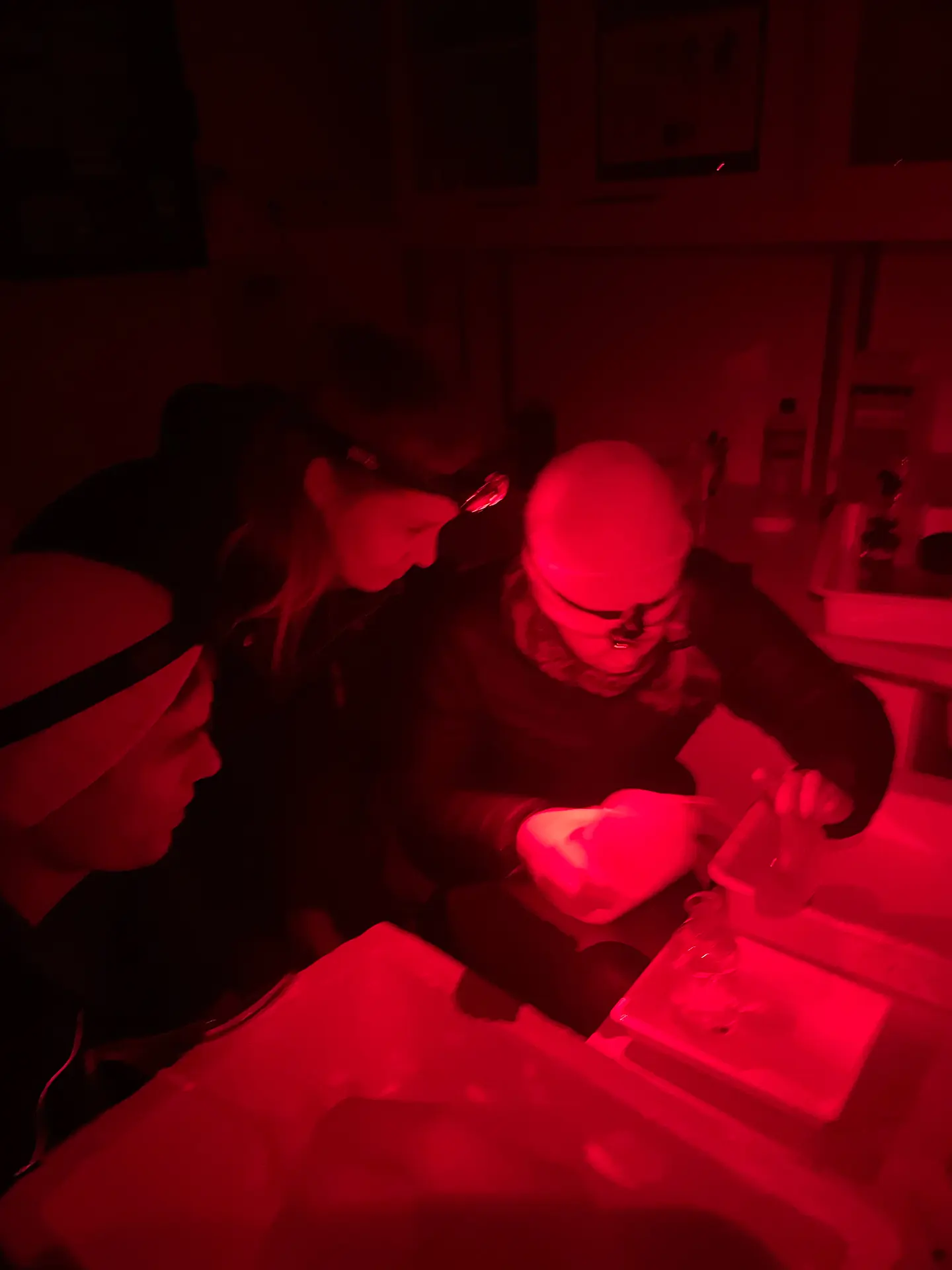
In the experiment, Dijkstra examined several parameters, including survival, oxygen consumption, and lipid reserves. It was time-consuming work. If one individual died in a sample, the water could quickly become contaminated and cause others to die as well, meaning the experiment had to be monitored every day.
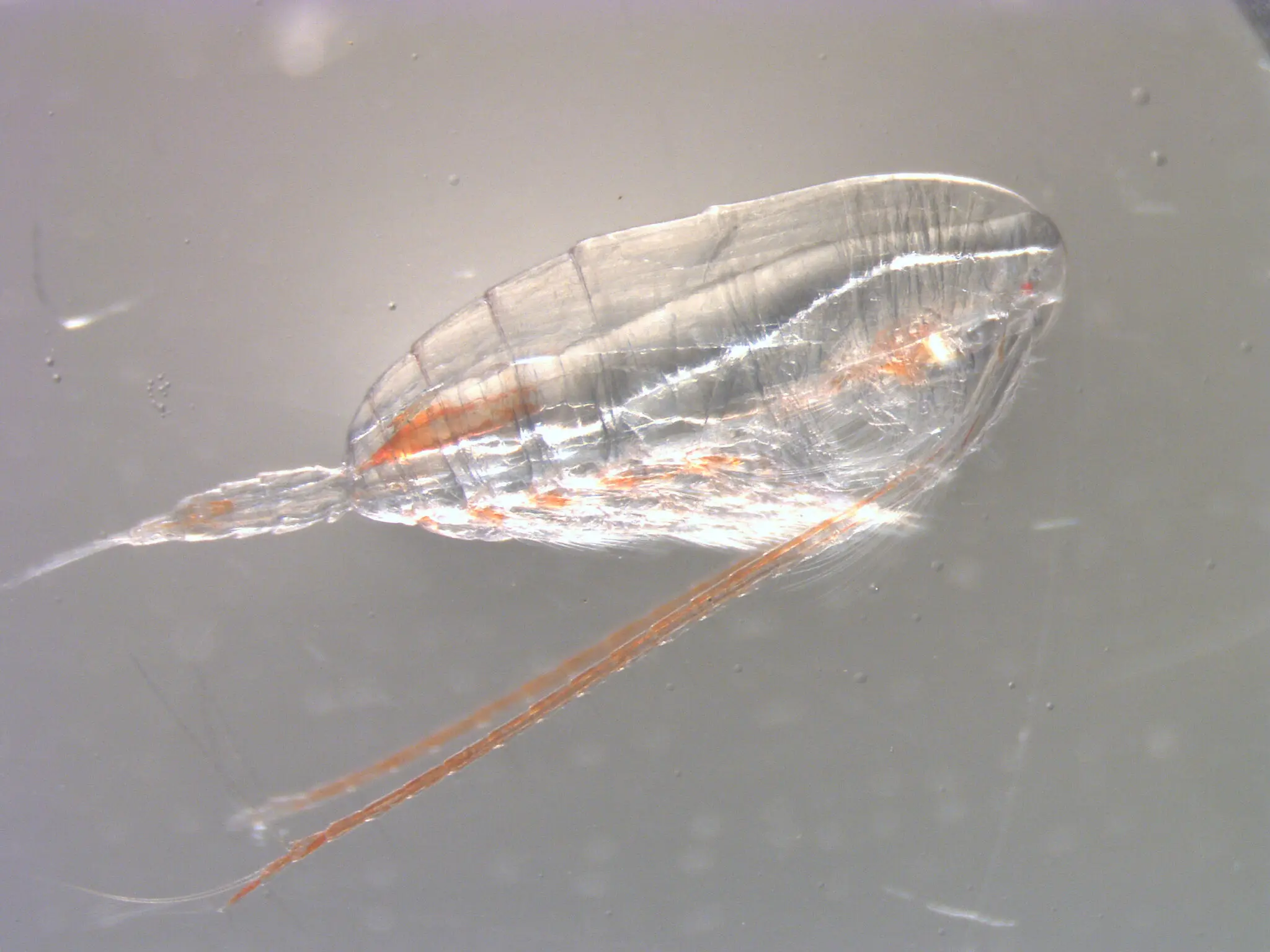
The researchers also measured lipid reserves using image analyses, which is possible because the fat is stored in a clearly visible sac inside the transparent body of the copepod.
– You can almost see with the naked eye how much energy they have left, Dijkstra says.
The project also included analyses of DNA damage, made possible through collaboration with Dr. Helena Reinardy of the Scottish Association for Marine Science and adjunct professor at UNIS, who introduced the necessary molecular technology.
This allowed the team to detect early signs of stress long before it became visible through reduced survival or altered metabolism.
One month earlier than normal
The most surprising finding concerned molting. The researchers observed that this transition occurred up to one month earlier than normal, mainly as a result of warmer water.
– It was so obvious that we could see it immediately, even without statistical analyses, says Dijkstra.
Søreide emphasises that timing is crucial.
– The fastest and strongest temperature changes happen during winter, and that is exactly when the species is most vulnerable.
Dijkstra explains that this can lead to what is known as a mismatch effect. The copepods’ reproduction is finely tuned to the spring algae bloom, when food becomes available. But if development happens too early, they risk facing an empty table.
– The sun will not return one month earlier. That is an ecological limitation, she says.
Søreide elaborates:
– These animals can produce eggs before the algae bloom by using their stored fat reserves. But if their development into adults happens too early, they also start using up their energy earlier. In the worst case, they die before they have a chance to replenish those reserves.
If the females die before spring arrives, the population also loses its second wave of egg production.
– That affects the entire cohort and, ultimately, the whole population, she says.
What happens if key species disappear?
The researchers stress that this is not an abstract future scenario. Today, bottom temperatures between two and three degrees above zero are already being measured in the areas they study—temperatures influenced by the inflow of Atlantic water, a process known as Atlantification.
Atlantification describes how warmer, saltier Atlantic water masses gradually move into Arctic regions and alter ecosystems.
– This is happening now. It is not a 2100 scenario, says Dijkstra.
Søreide emphasises that nature is adaptable. If one species declines, others may take over its niche. The question is whether they can fulfil the same ecological role.
The Arctic food web is highly dependent on large, lipid-rich Arctic copepods such as Calanus glacialis, and C. hyperboreus.
These species function as energy carriers up the food chain—from plankton to fish, seabirds, and marine mammals.
If Atlantification leads to a shift toward smaller and “leaner” species, the consequences could be significant.
– The little auk, for example, is highly selective in what it eats, and we are already seeing population declines. Even small shifts in timing can have major consequences, says Søreide.
The polar night is not a pause
One of the study’s most important messages is that the polar night is not a biological pause. Quite the opposite.
– Many people think of winter as an inactive period, but for these species it may be the most important phase of their entire life cycle, says Dijkstra.
This also has implications for industry and environmental management.
Winter is often considered the least vulnerable time for activities such as oil exploration or other resource extraction. But if this period is critical for key biomass species in the ecosystem, the timing of such activities may need to be reconsidered.
– A master’s thesis is real research
For other master’s students hoping to publish, Dijkstra has a clear message:
– Remember that a master’s thesis is not just an assignment. It is real research. The data you collect are valuable, and it would be a shame if all that work simply stayed in a drawer.
Søreide also sees master’s students as an important institutional investment. UNIS has many talented students, and in this labour-intensive study Dijkstra recruited bachelor students Luise Scott and Nele Thompson to help with the experiment. Both are included as co-authors on the publication.
– Through projects like these, students learn collaboration, teamwork, and how research actually works. Research-relevant teaching is one of UNIS’ real strengths, she concludes.