
Minor in Polar Science (Pilot project)
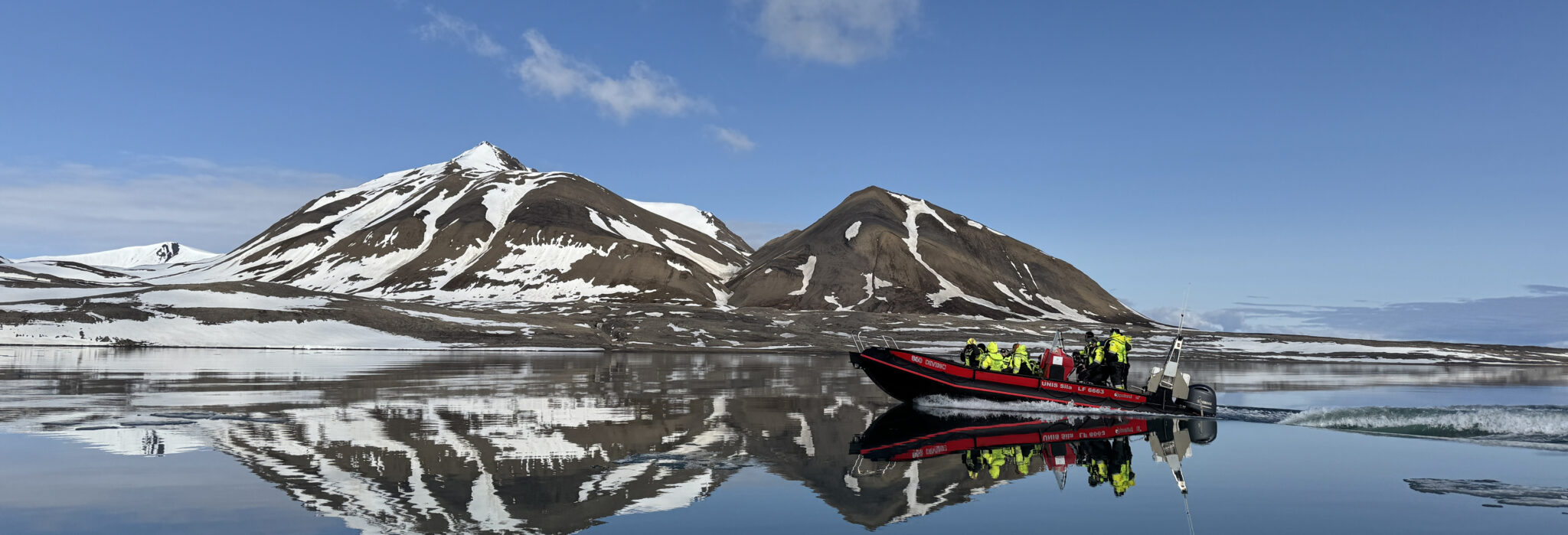
Are you a Master’s student at a Norwegian university? If so, this is a unique opportunity to spend a semester on Svalbard and become part of a interdisciplinary study environment.
With this course combination you will combine academic depth with cross‑disciplinary expertise, working alongside outstanding researchers, lecturers, and fellow students. These packages gives you experiences at the university center and gets you out in the field.
Note: This course combination is a pilot and the first semester will therefor be the defining ground of how this combination will be set for later courses.
Why choose this pilot
As Norway’s only institution for research and higher education on Svalbard, UNIS has a distinctive role as a national and international education hub for polar research. Students acquire unique field skills and experience from real Arctic conditions, combined with a strong understanding of safety and logistics.
The establishment of the Minor in Polar Science is a strategic response to the need for the next generation of polar researchers, and the programme produces graduates who, upon completion of their studies, can move directly into national and international research programmes such as Polar Ocean 2050 and the International Polar Year 2032-33 (IPY5).
General skills such as field competence, risk management, and natural hazard mitigation are in demand in both public administration and the private sector.
– Managing Director at UNIS,
Jøran Moen

The UNIS Scholarship
In this pilot project only, UNIS will provide a dedicated grant for students coming to Svalbard.
The grant amounts to NOK 30,000, distributed over five months.
Only eligible for students enrolled at a university in Norway.
(More details surrounding this scholarship will follow)
Course descriptions:
UNIS will offer four semester packages in the pilot for autumn 2026:
Biodiversity and adaptations in a freezing Arctic
The three postgraduate blocks focus on the ecology of the Barents Sea, molecular tools to reveal biodiversity and seasonal change, and finish with setting this ecology in the context of rapid Arctic environmental change on both land and sea. By successfully completing this three-course semester package you will gain an insight and understanding of Arctic ecosystem seasonal transition as the short Arctic summer draws to a close and the 24 hour polar night commences.
Requirements:
Enrollment in a master programme in biology, have bachelor level marine biology, and possess basic molecular biology knowledge. Experience of R or Python is advantageous and common cross-disciplinary knowledge of climate change and its effect in the Arctic are expected.
Climate Archives, Remote Sensing, and Space Weather
This cross disciplinary program bridges palaeoclimatology, remote sensing of the cryosphere, and space weather. Students will analyze Svalbard’s geology to reconstruct past environments, use satellite data to monitor contemporary cryospheric changes, and investigate electromagnetic Sun-Earth interactions and their impacts on modern infrastructure. By integrating geology, climatology, and space science, the program equips students with a wide set of skills to address the challenges of a rapidly changing Arctic.
Course requirements:
Enrollment in a relevant master’s programme. Students should have fundamental understanding of terrestrial geology (sedimentology, stratigraphy), and knowledge about electromagnetism.
Safety Management, Emergency Preparedness, and Risk Handling in the High Arctic
This postgraduate package brings together the three courses Safety Management in the Arctic, Emergency Preparedness and Response in the Arctic, and Risk Handling in the Arctic Operational Context to provide a broad introduction to safety, risk, and emergency preparedness in the High Arctic. Students learn how Arctic conditions influence human performance and safety in High Arctic operational contexts. The package combines theory with applied perspectives relevant for operations, crisis response, and long‑term risk governance in Svalbard and similar polar environments.
Course requirements:
Enrollment in a relevant master’s programme in social‑, technological‑, or natural sciences is required. Prior knowledge of safety or risk topics (≈10 ECTS) is recommended.
Arctic Geology
(More information to follow)
How to apply
To be eligible for this course combination and to get the minor title on your degree, you have to study at UNIS for a whole semester.
You must also have been accepted as a Master’s student at a Norwegian university before applying.
Lastly you must have a written approval from your home university confirming that they will add this title to your degree. This needs to be sent in together with the rest of your application.
More information on how to apply for courses at UNIS is found here: How to apply – UNIS
Biodiversity and adaptations in a freezing Arctic
AB-320 Arctic Marine Zooplankton (10 ECTS)
AB-332 Arctic Marine Molecular Ecology (10 ECTS)
AB-340 Climate Change Biology (10 ECTS)
Arctic Geology
AG-353 Arctic Terrestrial and Marine Climate History (10 ECTS)
AG-326 Arctic Quaternary Environments (10 ECTS)
AB-340 Climate Change Biology (10 ECTS)
Polar Environments: Climate Archives, Remote Sensing, and Space Weather
AG-353 Arctic Terrestrial and Marine Climate History (10 ECTS)
AGF-312 Remote Sensing of the Cryosphere (10 ECTS)
AGF-345 Polar Magnetospheric Substorms (10 ECTS)
Arctic safety and human factors in the High Arctic
AS-302 Safety Management in the Arctic (10 ECTS)
AS-303 Emergency Preparedness and Response in the Arctic (10 ECTS)
AS-304 Risk handling in the Arctic operational context (10 ECTS)
All packages also includes:
AS- 102 – Safety course for students – 2 ECTS
Interdisciplinary course (history, geopolitics, security policy and sustainable activity in the Arctic) – 5 ECTS – running throughout the entire semester.